

- eddie
Comparing Paint Correction and Paint Enhancement for Defect Removal and Paint Condition
Paint correction is a detailing process that removes or reduces visible paint defects such as swirl marks, oxidation, scratches, and dullness through machine polishing. Paint enhancement, on the other hand, is a lighter polishing service focused on improving gloss, clarity, and shine without chasing deeper imperfections.
When comparing paint correction vs paint enhancement, the right choice depends on the current condition of the vehicle’s paint. A car with heavy defects usually needs correction, while a well-maintained car may only need enhancement to refresh its appearance.
This blog explains the difference between both services, how much defect removal each provides, how time and labor compare, and which type of vehicle benefits most from each option.
What Is the Difference Between Paint Correction and Paint Enhancement?
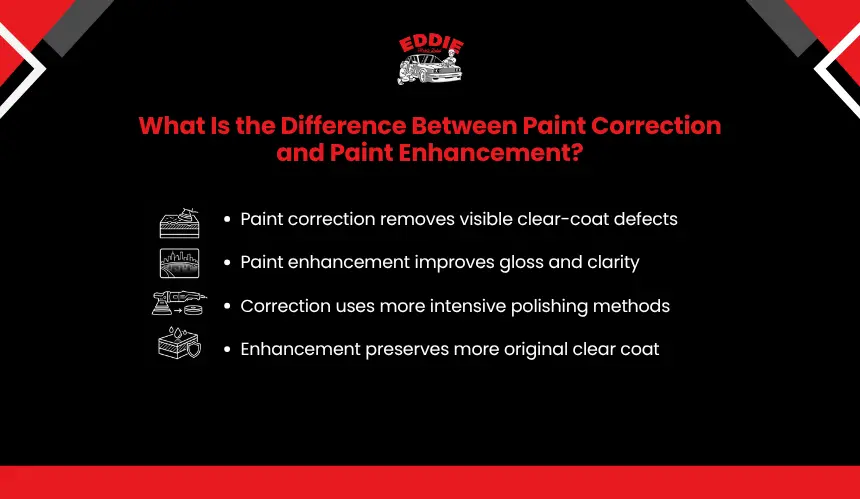
Paint correction focuses on defect removal, while paint enhancement focuses on appearance improvement. Although both services involve machine polishing, they are designed to achieve different results.
The biggest difference is the goal of the process. Paint correction targets imperfections in the clear coat, whereas paint enhancement aims to increase gloss and clarity without extensive defect removal.
What paint correction is designed to achieve
Paint correction is intended to remove or significantly reduce swirl marks, oxidation, water spots, and other paint defects. Multiple polishing stages may be used to improve the condition of the clear coat and restore a cleaner finish.
Because the process prioritizes defect removal, paint correction is generally more intensive. The objective is to improve the actual condition of the paint rather than simply increasing shine.
What paint enhancement is designed to improve
Paint enhancement is designed to refresh the appearance of the vehicle by improving gloss, depth, and surface clarity. The process usually removes only minor imperfections while focusing primarily on visual improvement.
Since paint enhancement involves lighter polishing, more original clear coat remains untouched. This makes it a suitable option for vehicles that already have relatively good paint condition.
Which Process Removes More Paint Defects?
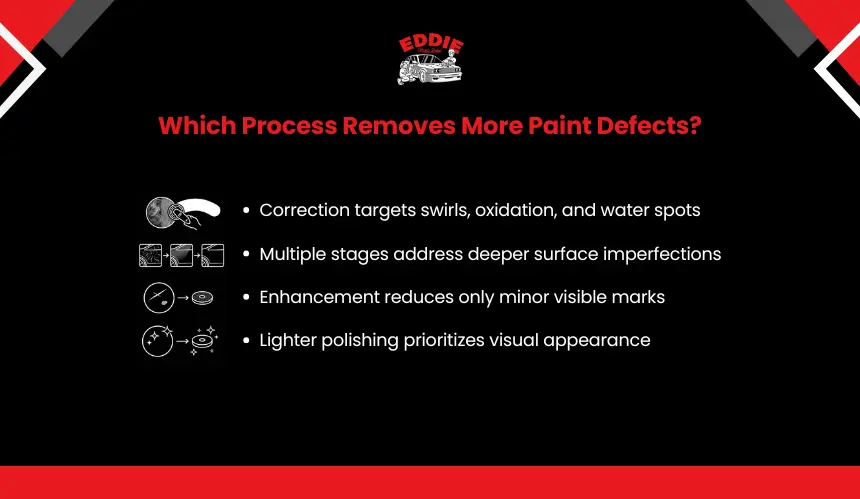
Paint correction removes more paint defects because it is specifically designed for defect reduction. Paint enhancement improves appearance, but its ability to remove imperfections is much more limited.
Both services can make a vehicle look better, but they do not deliver the same level of restoration. The amount of defect removal depends on the polishing approach and the condition of the paint.
Why paint correction delivers deeper defect removal
Paint correction uses more aggressive polishing combinations to target swirl marks, oxidation, water spots, and other visible imperfections. Multiple stages may be performed to improve the overall condition of the paint surface.
Because the process focuses on correction rather than appearance alone, deeper defects are addressed more effectively. This allows severely neglected paint to achieve a much greater level of improvement.
Why paint enhancement focuses on visual improvement
Paint enhancement uses lighter polishing methods that prioritize gloss and clarity over maximum defect removal. Minor imperfections may become less noticeable, but deeper defects often remain partially visible.
The goal is to improve the overall appearance without performing extensive corrective work. This approach provides noticeable results while requiring less polishing than full paint correction.
Which Service Requires More Time and Labor?
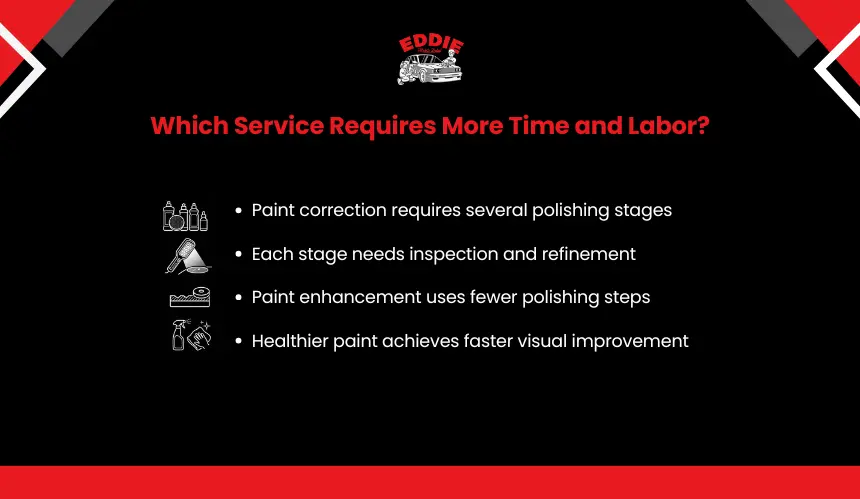
Paint correction requires more time and labor because achieving deeper defect removal involves additional polishing work. Paint enhancement is faster because it focuses on improving appearance rather than maximizing correction.
The difference in labor affects not only the amount of time spent on the vehicle but also the complexity of the process. The condition of the paint usually determines how extensive the service needs to be.
How paint correction involves multiple polishing stages
Paint correction often includes several polishing stages to address defects at different levels. Compounding and refining processes may be combined to improve the finish while producing a more uniform appearance.
Because each stage requires additional inspection and polishing time, the service is generally more labor-intensive. Severely damaged paint may require even more attention depending on the level of correction needed.
How paint enhancement provides faster results
Paint enhancement usually relies on a lighter polishing process designed to improve gloss and surface clarity efficiently. Since the focus is not on removing every defect, fewer polishing steps are required.
This shorter process allows noticeable visual improvement without the extended labor associated with full correction. Vehicles with relatively good paint condition often benefit from this quicker approach.
Which Service Matches the Current Condition of Your Paint?
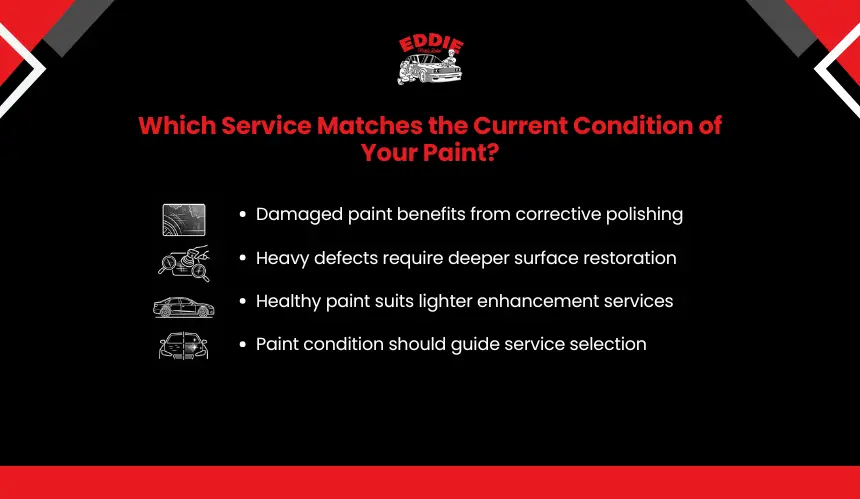
Paint correction is better for vehicles with noticeable defects, while paint enhancement is better for paint that already has a healthy appearance. The current condition of the finish often determines which service provides the most appropriate improvement.
Inspecting the severity of swirl marks, scratches, oxidation, and dullness helps identify whether the paint needs restoration or simply a visual refresh. Choosing the service based on paint condition usually leads to more realistic expectations.
Paint correction suits neglected or visibly damaged paint
Vehicles with heavy swirl marks, oxidation, water spots, and visible scratches often require paint correction. These defects affect the appearance of the finish and usually need deeper polishing to achieve noticeable improvement.
Older vehicles and cars that have experienced years of improper washing commonly benefit from corrective polishing. The goal is to address existing defects rather than simply increase gloss.
Paint enhancement suits clean paint that needs more gloss
Vehicles with relatively healthy paint and only minor imperfections are often good candidates for paint enhancement. In these situations, extensive correction may not be necessary to improve the overall appearance.
A lighter polishing process helps increase shine, clarity, and depth while preserving more of the existing clear coat. This approach works well for regularly maintained vehicles that only need a cosmetic refresh.
Frequently Asked Questions
Can paint correction completely remove every scratch?
No, paint correction cannot remove every defect. The amount of improvement depends on the depth of the scratch and the condition of the clear coat. Deep scratches that extend beyond the clear coat may remain partially visible.
Can paint enhancement increase gloss without removing many defects?
Yes, paint enhancement is primarily intended to improve shine, depth, and clarity. Although some minor imperfections may become less noticeable, the service is not designed for extensive defect removal.
Is paint correction safe for factory paint?
When performed properly, paint correction is generally safe because only a controlled amount of clear coat is removed. Professional evaluation helps determine how much correction the paint can safely tolerate.
Can newer vehicles still benefit from paint correction?
Yes, even newer vehicles may develop swirl marks, water spots, or dealership-installed imperfections. The condition of the paint is more important than the age of the vehicle.
Can paint enhancement be repeated more frequently than paint correction?
Because paint enhancement involves lighter polishing, it can usually be performed more often than aggressive corrective polishing. This makes it suitable for maintaining appearance over time.
Should a vehicle be washed before either service?
Yes, proper washing and surface decontamination are important before both paint correction and paint enhancement. Clean paint allows polishing results to be more accurate and consistent.